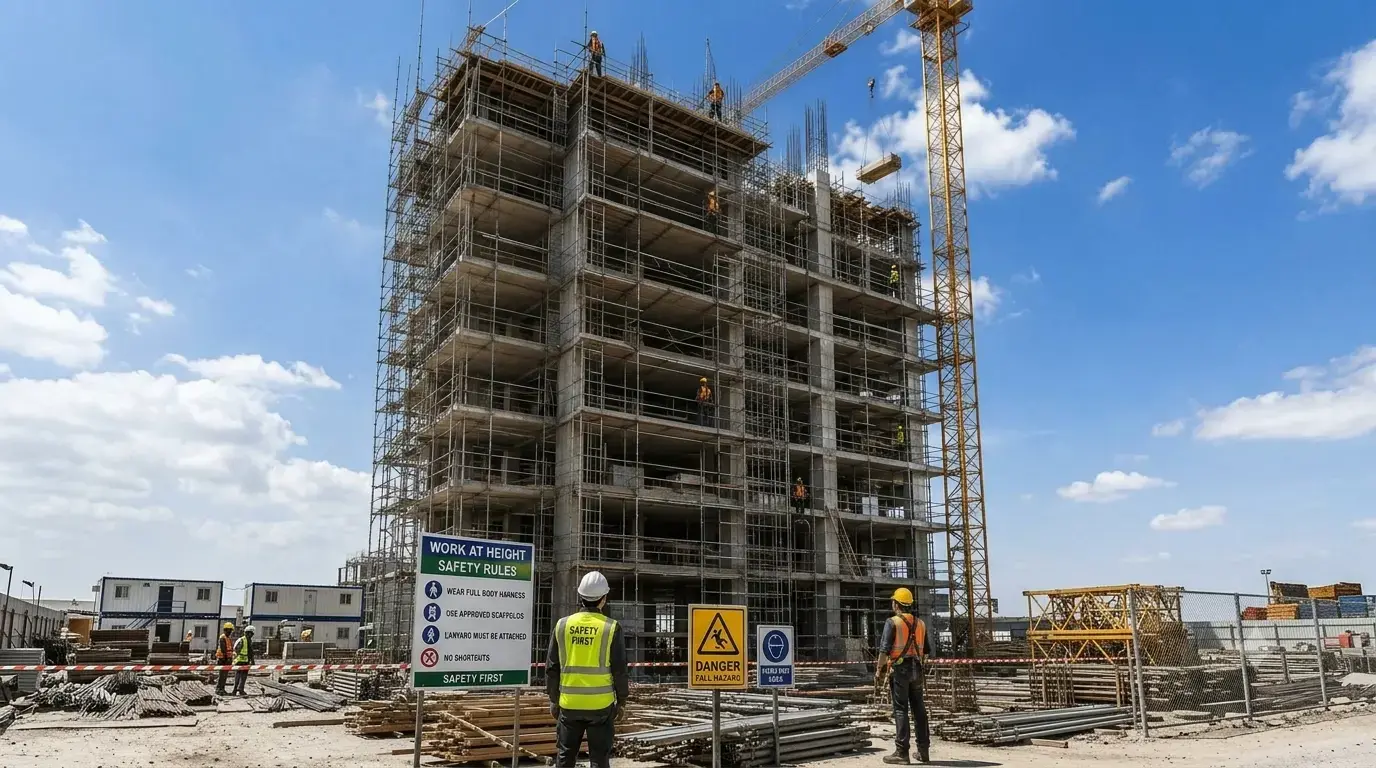
Work at Height Training in Kenya
Work at Height Training in Kenya
Published by Safetec Solutions Limited
Falls from height remain one of the leading causes of serious workplace
injuries and fatalities worldwide. Whether working on rooftops, scaffolding,
elevated platforms, steel structures, warehouses, telecommunications towers, or
industrial facilities, working at height exposes employees to significant risks
that require careful planning, competent supervision, and specialized training.
Unfortunately, many workplace incidents occur not because safety
equipment was unavailable, but because workers lacked the knowledge and
practical skills to use it correctly.
At Safetec Solutions Limited, we believe that every employee
deserves to return home safely after every shift. Since 2008, we have
partnered with organizations across Kenya to improve workplace safety through
professional Work at Height Training, Occupational Safety and Health (OSH)
Training, Workplace Risk Assessments, Fire Safety Training, and compliance
advisory services.
This guide explains why work at height training is essential, who
requires it, common workplace hazards, and how organizations can create safer
working environments.
What Is Working at Height?
Working at height refers to any activity where a person could fall and
sustain injury if appropriate precautions are not in place. Contrary to popular
belief, work at height is not limited to construction sites.
Employees working in warehouses, manufacturing plants, commercial
buildings, telecommunications, maintenance, utilities, logistics, and many
other industries routinely perform tasks at elevated locations.
Examples include:
- Working on roofs
- Using ladders
- Working on scaffolding
- Installing steel structures
- Maintaining overhead equipment
- Using elevated work platforms
(MEWPs)
- Working on storage tanks and
silos
- Telecommunications tower
maintenance
- Bridge inspections
- Warehouse racking maintenance
Even tasks performed a few meters above ground level can result in
life-changing injuries if adequate safety measures are not implemented.
Why Working at Height Is High Risk
Gravity never makes mistakes.
A fall from height often happens within seconds, leaving little
opportunity for workers to react. The consequences can include:
- Fatal injuries
- Broken bones
- Head injuries
- Spinal injuries
- Permanent disability
- Equipment damage
- Operational downtime
- Legal penalties
- Increased insurance and
compensation costs
Beyond the financial impact, workplace accidents affect employee morale,
organizational reputation, and business continuity.
Preventing falls should therefore be a priority for every employer.
Common Causes of Falls from Height
Most work at height incidents are preventable.
Some of the most common causes include:
Improper Ladder Use
Using damaged ladders, placing ladders on unstable surfaces, or failing
to follow the recommended 4:1 ladder positioning rule significantly
increases the likelihood of falls.
Failure to Wear Fall Protection
Harnesses, lanyards, and anchor systems are only effective when they are
correctly selected, inspected, and used.
Poor Planning
Beginning work without assessing hazards or developing a safe work
procedure exposes workers to unnecessary risks.
Lack of Competency
Employees who have not received proper training may not understand fall
hazards, equipment limitations, or emergency procedures.
Unsafe Work Practices
Taking shortcuts, bypassing safety procedures, or ignoring permit
requirements often contributes to workplace incidents.
Inadequate Supervision
Even experienced workers benefit from effective supervision that
reinforces safe behaviors and ensures compliance with established procedures.
Why Work at Height Training Matters
Providing workers with safety equipment is only part of the solution.
Employees must understand:
- How falls occur
- How to recognize hazards
- How to inspect equipment
- How to use harnesses correctly
- How to calculate fall clearance
- How to select suitable anchor
points
- How to perform emergency rescue
procedures
Professional training builds confidence while significantly reducing
workplace risks.
More importantly, it develops a safety culture where employees recognize
that working safely protects not only themselves but also their colleagues.
Essential Components of Work at
Height Training
A comprehensive Work at Height Training program should combine classroom
instruction with practical demonstrations and hands-on exercises.
Key topics include:
Hazard Identification
Workers learn how to identify potential fall hazards before work begins.
Ladder Safety
Correct ladder selection, inspection, positioning, and safe climbing
techniques.
The widely recognized 4:1 Rule recommends placing the ladder base
one metre away from the wall for every four meters of vertical height.
Fall Protection Equipment
Training covers:
- Full-body harnesses
- Lanyards
- Shock absorbers
- Anchor points
- Connectors
- Lifelines
Participants learn how each component contributes to preventing falls.
Harness Inspection
Employees are taught to inspect:
- Webbing
- Stitching
- Buckles
- D-rings
- Labels
- Connectors
Damaged equipment should never be used.
Fall Clearance Calculations
Before using a fall arrest system, workers must determine whether
sufficient clearance exists below the work area.
Important factors include:
- Lanyard length
- Shock absorber deployment
- Worker height
- Safety factor
- Ground clearance
Incorrect calculations can result in workers striking the ground despite
wearing a harness.
Emergency Rescue Procedures
Suspension trauma can develop quickly after a fall.
Training includes rescue planning, emergency communication, and post-fall
response procedures to minimize the time a suspended worker remains in a
harness.
Legal Responsibilities of Employers
Employers have a duty to provide a safe workplace by:
- Identifying work at height
hazards
- Conducting workplace risk
assessments
- Providing suitable fall
protection equipment
- Ensuring equipment is inspected
and maintained
- Training employees before
assigning work at height tasks
- Supervising work activities
- Reviewing procedures whenever
conditions change
Investing in competent training demonstrates a commitment to protecting
employees while supporting compliance with occupational safety requirements.
Benefits of Work at Height Training
Organizations that invest in professional training often experience:
- Reduced workplace accidents
- Improved employee confidence
- Better hazard awareness
- Stronger safety culture
- Increased productivity
- Reduced downtime
- Better regulatory compliance
- Lower compensation costs
- Improved business reputation
Safety training should be viewed as an investment rather than an expense.
Why Choose Safetec Solutions
Limited?
Since 2008, Safetec Solutions Limited has helped organizations
across Kenya build safer workplaces through practical, industry-focused
Environment, Health, and Safety (EHS) solutions.
Our experienced consultants and trainers provide:
- Work at Height Training
- Occupational Safety & Health
(OSH) Training
- Workplace Risk Assessments
- OSH Audits
- Fire Safety Audits
- Fire Safety Training
- Workplace Inspections
- Environmental Compliance Advisory
- Safety Management Consultancy
Our training programmes combine theory with practical demonstrations to
ensure participants gain the confidence and competence required to work safely
at height.
Frequently Asked Questions
How often should Work at Height
Training be conducted?
Training should be provided before employees begin work at height and
refreshed periodically, particularly when equipment, work methods, or
regulations change.
Who should attend Work at Height
Training?
Anyone whose job involves working where there is a risk of falling,
including construction workers, maintenance teams, warehouse personnel,
telecommunications technicians, and supervisors.
Does training eliminate all risks?
No. Training significantly reduces risk, but it should always be
supported by proper planning, workplace risk assessments, suitable equipment,
and effective supervision.
Conclusion
Working at height will always involve risk—but those risks can be
effectively managed through proper planning, competent training, suitable
equipment, and a strong safety culture.
Every fall prevented represents a life protected, a family spared
unnecessary hardship, and a business that continues to operate safely and
efficiently.
At Safetec Solutions Limited, we are committed to helping
organizations across Kenya develop competent teams through professional Workat Height Training and comprehensive workplace safety solutions.
Whether you operate in construction, manufacturing, logistics,
telecommunications, or any other industry where employees work above ground
level, our experienced trainers are ready to help your team work safely and
confidently.
Ready to strengthen your workplace
safety?
Contact us or Visit www.safetec.co.ke to learn more about our Work at
Height Training, OSH Training, Workplace Risk Assessments,
and other professional EHS services.