Course Overview
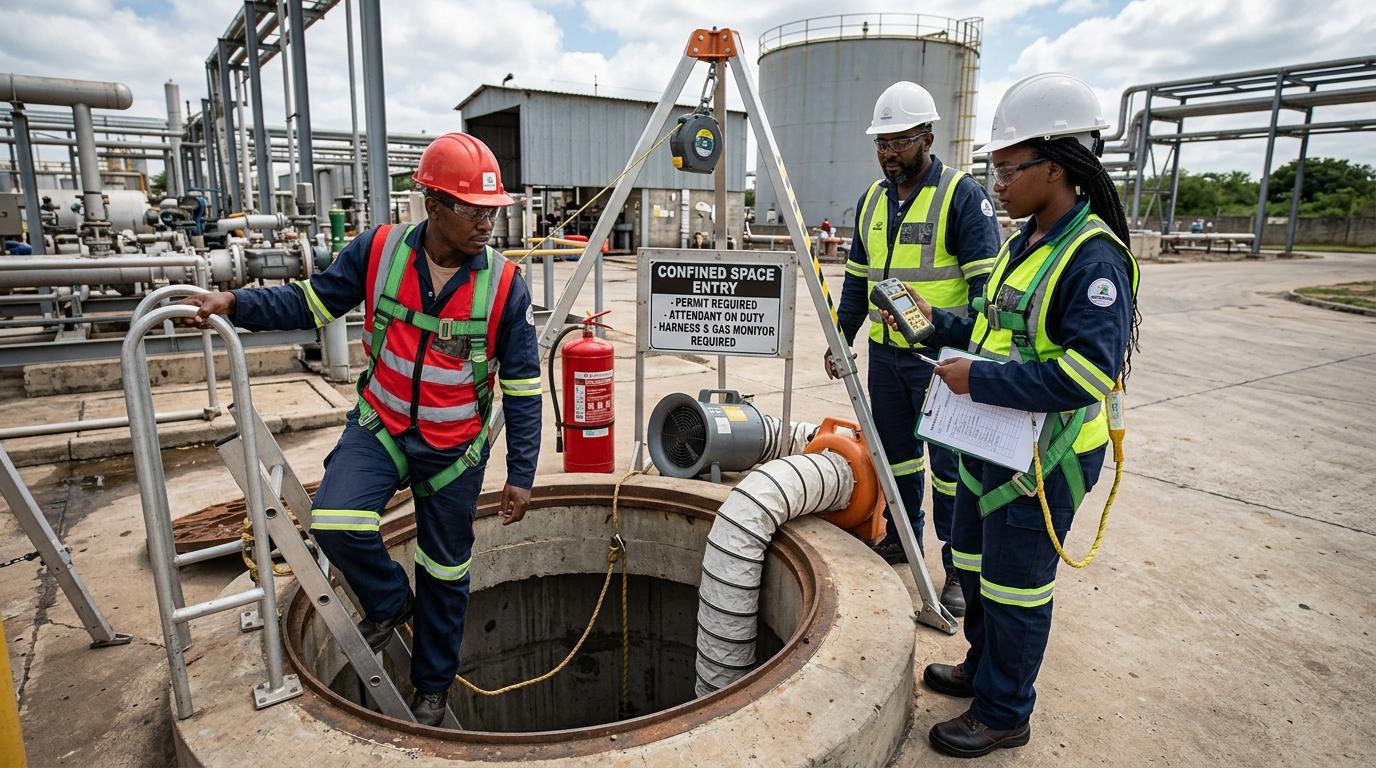
Confined Space Entry
Confined spaces can present serious workplace hazards due to
limited access, restricted ventilation, hazardous atmospheres, engulfment
risks, and difficult emergency evacuation. Confined Space Entry Safety
training provides workers and supervisors with the knowledge and practical
awareness needed to safely identify, assess, enter, work in, and exit confined
spaces.
The training focuses on recognizing confined-space hazards,
conducting appropriate risk assessments, implementing control measures, and
following safe entry procedures. Participants learn how to use atmospheric
monitoring equipment, understand permit-to-work requirements, select
appropriate personal protective equipment (PPE), maintain effective
communication, and respond appropriately to emergencies.
Key topics include confined-space identification, hazard
assessment, atmospheric testing, oxygen deficiency and toxic or flammable
gases, ventilation, isolation and lockout/tagout, entry permits, PPE, fall
protection, communication systems, standby personnel, emergency procedures, and
rescue planning.
Key Learning Areas
- Understanding
what constitutes a confined space and the associated hazards
- Identifying
physical, atmospheric, and environmental risks
- Conducting
confined-space risk assessments
- Understanding
confined-space entry permits and safe work procedures
- Testing
and monitoring atmospheric conditions before and during entry
- Understanding
oxygen deficiency, toxic gases, and flammable atmospheres
- Applying
appropriate ventilation and atmospheric control measures
- Understanding
isolation, lockout/tagout, and energy-control requirements
- Selecting
and correctly using appropriate PPE and respiratory protection
- Establishing
effective communication between entrants and attendants
- Understanding
the responsibilities of entrants, attendants, and entry supervisors
- Implementing
safe entry, work, and exit procedures
- Developing
and following emergency response and rescue procedures
- Recognizing
when conditions become unsafe and entry must be stopped
Who Should Attend?
Confined Space Entry training is suitable for workers who
enter or may be required to enter confined spaces, supervisors, entry
supervisors, safety officers, maintenance personnel, contractors, emergency
response teams, and other personnel responsible for planning, supervising, or
supporting confined-space activities.
Benefits of Confined Space Entry Safety Training
Proper confined-space training helps organizations identify
hazards before entry, establish effective controls, and reduce the risk of
incidents involving hazardous atmospheres, falls, engulfment, exposure to toxic
substances, and other confined-space hazards.
The training also helps workers understand their
responsibilities and follow established entry procedures, while enabling
supervisors and safety personnel to implement appropriate monitoring,
communication, emergency response, and rescue arrangements.
By combining hazard identification, atmospheric monitoring,
safe entry procedures, appropriate PPE, effective supervision, and emergency
preparedness, organizations can establish safer systems of work for
confined-space activities.
Learning Objectives
Course Requirements
• Be able to understand and follow workplace safety instructions and emergency procedures.
• Have a basic understanding of occupational health and safety principles.
• Be physically capable of participating in relevant practical exercises, subject to applicable workplace health requirements.
• Wear suitable work clothing and safety footwear for practical training activities.
• Use appropriate PPE and safety equipment as instructed by the training provider.
• Be prepared to participate in practical exercises involving hazard identification, atmospheric monitoring, entry procedures, communication, and emergency response, where applicable.
• Participants involved in actual confined-space work should be familiar with their organization's confined-space procedures, risk assessments, permit-to-work system, and emergency arrangements.
• Where applicable, participants should have access to the specific gas detectors, PPE, communication systems, retrieval equipment, and other equipment used at their workplace for training and practical familiarization.
• Any relevant accessibility, medical, or participation requirements should be communicated to the training provider in advance so appropriate arrangements can be considered.
Recommended Prerequisite
No formal prerequisite is generally required for introductory Confined Space Entry training. However, participants who are expected to perform specialized roles—such as entry supervisors, attendants, gas testers, or rescue personnel—may require additional role-specific training and competency assessment.
Important Note
Confined-space entry should only be undertaken following an appropriate hazard assessment and in accordance with the organization's approved procedures and applicable legal or regulatory requirements. Practical entry and rescue exercises should be conducted under controlled conditions using suitable equipment and competent supervision. Unplanned rescue attempts can expose additional workers to serious hazards and should be avoided unless personnel are appropriately trained and equipped.