Course Overview
First Aid & CPR training provides individuals
with the knowledge and practical skills needed to respond safely and
effectively to medical emergencies, injuries, and sudden illnesses before
professional medical assistance arrives. The training focuses on recognizing
emergencies, protecting the casualty and responder, providing appropriate
immediate care, and knowing when and how to seek further medical assistance.
1. First Aid Fundamentals
Participants learn the basic principles of first aid and how
to respond confidently during an emergency. This includes:
- Assessing
an emergency scene for safety.
- Protecting
yourself, the casualty, and other people.
- Recognizing
life-threatening conditions.
- Conducting
an initial assessment.
- Calling
or arranging appropriate emergency medical assistance.
- Using
basic first-aid equipment.
- Monitoring
a casualty until professional help arrives.
- Understanding
the importance of infection prevention and personal protective equipment.
2. Cardiopulmonary Resuscitation (CPR)
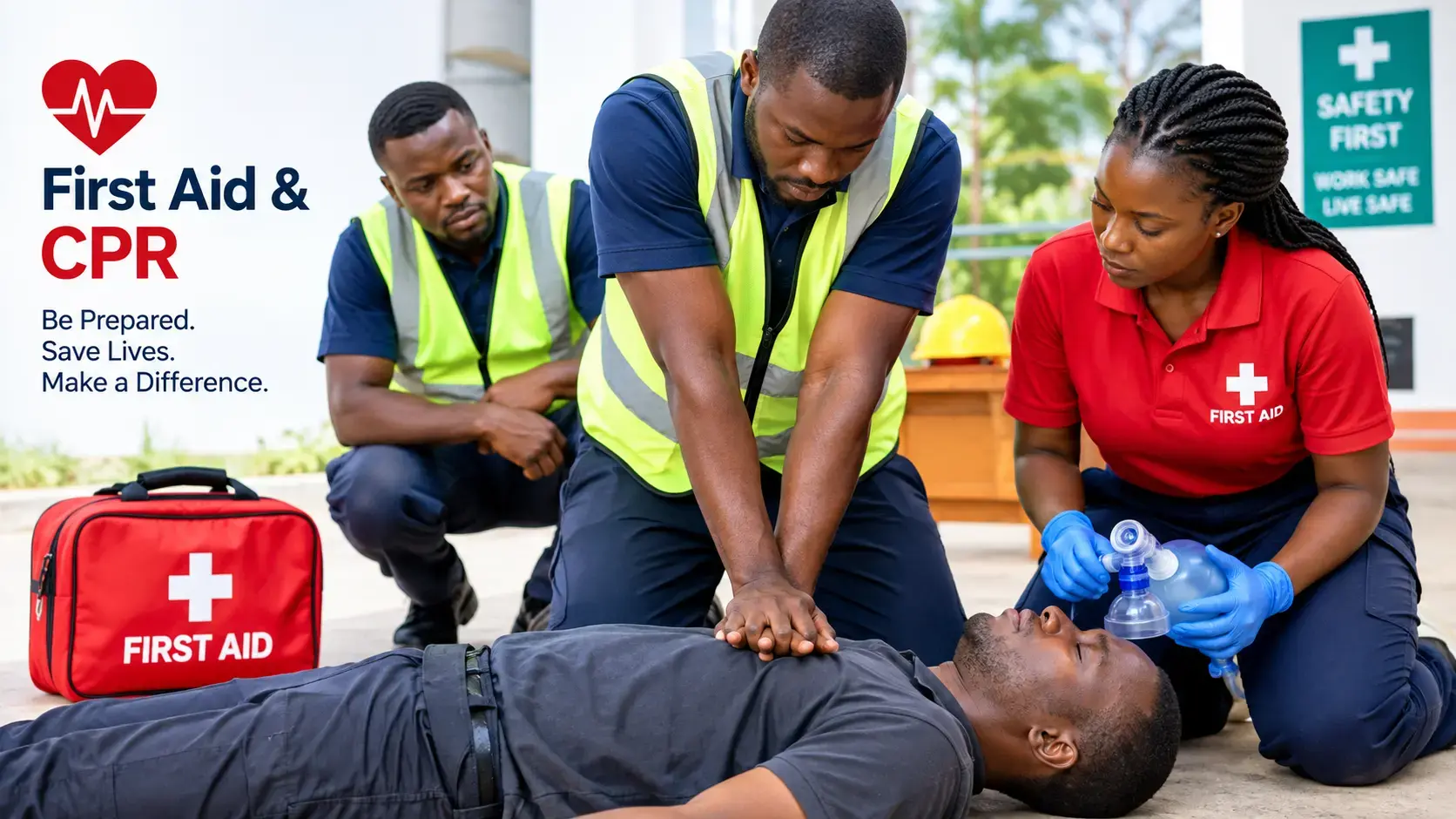
CPR is an emergency procedure used when a person is
unresponsive and not breathing normally. Training typically covers:
- Recognizing
cardiac arrest.
- Checking
responsiveness and breathing.
- Activating
the emergency response system.
- Performing
chest compressions.
- Providing
rescue breaths where appropriate and where the responder is trained and
willing to do so.
- Using
an automated external defibrillator (AED).
- Following
AED prompts safely.
- Continuing
CPR until the person shows signs of life, professional responders take
over, or the responder is unable to continue safely.
3. Choking Emergencies
Participants learn how to recognize and respond to airway
obstruction, including:
- Identifying
mild and severe choking.
- Encouraging
an effective cough when appropriate.
- Providing
appropriate first-aid interventions for severe choking.
- Recognizing
when the casualty becomes unresponsive.
- Initiating
CPR when required.
- Seeking
emergency medical assistance.
4. Bleeding and Wound Management
Training covers the immediate management of bleeding and
common wounds, including:
- Recognizing
serious bleeding.
- Applying
appropriate direct pressure.
- Using
dressings and bandages.
- Applying
additional dressings when necessary.
- Recognizing
signs that urgent medical attention is required.
- Managing
minor cuts, abrasions, and wounds.
- Reducing
the risk of infection.
5. Shock
Participants learn to recognize potential signs of shock and
understand appropriate first-aid measures, including:
- Identifying
possible causes of shock.
- Monitoring
the casualty.
- Helping
maintain normal body temperature.
- Providing
reassurance.
- Avoiding
unnecessary movement.
- Arranging
urgent medical assistance when required.
6. Burns and Scalds
First-aid procedures for burns may include:
- Removing
the person from the source of danger when safe.
- Cooling
the affected area appropriately.
- Protecting
the injury after cooling.
- Recognizing
serious or extensive burns.
- Understanding
when professional medical treatment is required.
- Avoiding
inappropriate substances or treatments that may worsen the injury.
7. Fractures, Sprains, and Strains
Participants learn how to provide initial care for
musculoskeletal injuries, including:
- Recognizing
possible fractures.
- Supporting
and protecting an injured limb.
- Minimizing
unnecessary movement.
- Managing
swelling and pain appropriately within first-aid guidance.
- Recognizing
injuries requiring urgent medical assessment.
8. Head, Neck, and Spinal Injuries
The training addresses the recognition and initial
management of potentially serious injuries involving the head, neck, or spine.
Participants learn to:
- Recognize
warning signs.
- Avoid
unnecessary movement where spinal injury is suspected.
- Monitor
the casualty.
- Maintain
an appropriate airway when necessary.
- Obtain
professional medical assistance.
9. Fainting, Seizures, and Unconsciousness
Participants learn how to respond to common medical
emergencies, including:
- Fainting.
- Seizures.
- Loss
of consciousness.
- Breathing
difficulties.
- Sudden
deterioration in a person's condition.
The emphasis is on protecting the casualty from further
injury, maintaining an open airway where appropriate, monitoring breathing, and
obtaining emergency medical assistance when necessary.
10. Medical Emergencies
Depending on the course level, First Aid & CPR training
may also cover recognition and initial response to conditions such as:
- Heart
attack.
- Stroke.
- Asthma
and breathing difficulties.
- Severe
allergic reactions.
- Diabetic
emergencies.
- Heat-related
illness.
- Hypothermia.
- Poisoning.
- Other
sudden illnesses.
11. Use of First-Aid Equipment
Participants become familiar with appropriate first-aid
supplies and their safe use, which may include:
- First-aid
kits.
- Gloves
and other protective equipment.
- Sterile
dressings.
- Bandages.
- Gauze.
- Adhesive
dressings.
- Resuscitation
barriers.
- Emergency
blankets.
- AEDs.
12. Emergency Response and Communication
Effective first aid also depends on rapid communication.
Participants learn how to:
- Activate
emergency medical services.
- Clearly
communicate the location and nature of an emergency.
- Provide
relevant information about the casualty.
- Follow
instructions from emergency dispatchers.
- Direct
emergency responders to the incident location.
- Maintain
communication with responsible personnel where applicable.
13. Practical Skills and Scenario-Based Training
Practical exercises allow participants to apply their
knowledge in realistic situations. Training may include:
- CPR
practice using a training manikin.
- AED
demonstrations and practice.
- Choking-response
exercises.
- Bleeding-control
scenarios.
- Recovery-position
practice.
- Bandaging
and dressing exercises.
- Simulated
workplace or public emergencies.
- Team-based
emergency-response scenarios.
14. Workplace First Aid
For organizations, First Aid & CPR training can form
part of a broader workplace emergency preparedness program. It may help
designated personnel respond to incidents involving employees, contractors,
visitors, and members of the public while awaiting professional medical
assistance.
15. Training and Competency
A First Aid & CPR program should combine theoretical
instruction with practical skills assessment where applicable. Participants
should understand both what to do and when not to intervene,
particularly when a situation presents a danger to the responder.
Training content and certification requirements should be
aligned with the applicable local regulations, recognized training standards,
and the requirements of the relevant certifying organization.
Overall Objective
The overall objective of First Aid & CPR training
is to equip participants with the knowledge, confidence, and practical skills
required to recognize emergencies, provide appropriate immediate assistance,
perform CPR when indicated, use an AED, manage common injuries and medical
emergencies, and support a casualty safely until professional medical help is
available.
Learning Objectives
Course Requirements
• Be able to understand and follow safety and emergency instructions.
• Have a basic understanding of workplace health and safety principles.
• Be physically able to participate in practical first aid and CPR exercises, including CPR demonstrations on a training manikin.
• Wear comfortable clothing suitable for practical activities.
• Attend all required theoretical and practical training sessions.
• Participate in practical assessments and demonstrations as required by the training program.
• Where an AED module is included, participants should be prepared to practice its safe operation using approved training equipment.
• Any specific medical, accessibility, or participation requirements should be communicated to the training provider in advance so appropriate arrangements can be considered.
Recommended Prerequisite
No formal prerequisite is generally required for introductory First Aid & CPR training. Participants do not normally need previous first aid experience, although refresher training should be completed at intervals appropriate to the applicable training standards, workplace requirements, and certification arrangements.
Important Note
First Aid & CPR training should be delivered using current, recognized first-aid and resuscitation guidance and should be appropriate to the participant's workplace, role, and applicable local requirements. Certification requirements and validity periods may vary depending on the training provider and governing standards.