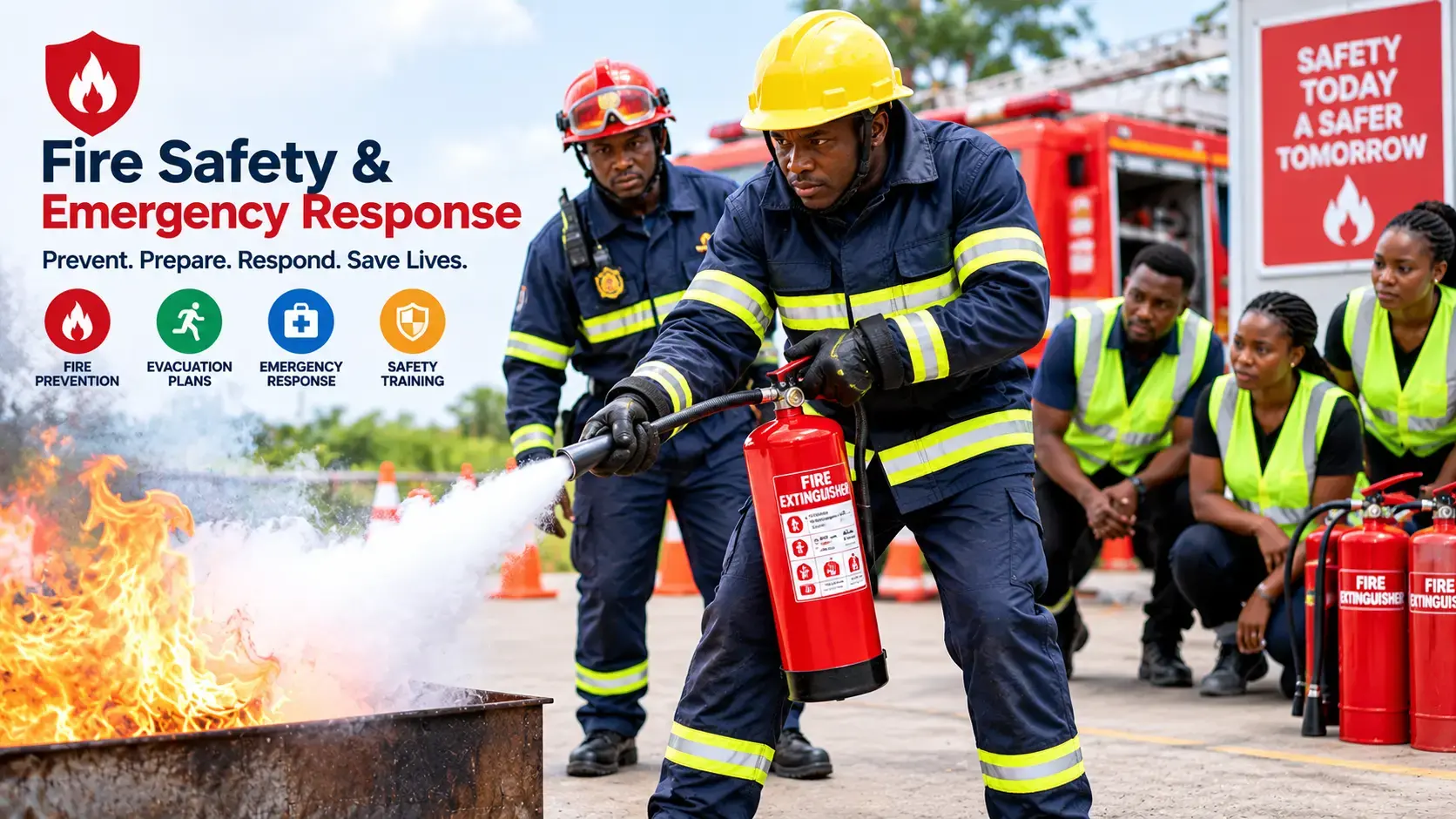
Course Overview
Fire Safety & Emergency Response is a comprehensive
system of policies, procedures, training, equipment, and coordinated actions
designed to prevent fires, protect people and property, minimize damage, and
ensure an effective response to fire and other emergencies.
1.
Fire Prevention
Fire safety begins with identifying and controlling
potential fire hazards before an incident occurs. This includes:
- Identifying sources of ignition
such as electrical faults, open flames, hot surfaces, and combustible
materials.
- Maintaining electrical
installations, equipment, machinery, and appliances.
- Proper storage and handling of
flammable and combustible substances.
- Keeping emergency exits,
stairways, corridors, and access routes clear.
- Controlling smoking and other
ignition sources in designated areas.
- Maintaining good housekeeping and
appropriate waste-disposal practices.
- Conducting regular fire-risk
assessments and correcting identified hazards.
2.
Fire Detection and Alarm Systems
Effective detection and early warning are essential for
protecting occupants. Fire safety arrangements may include:
- Smoke, heat, flame, or other
automatic fire detectors.
- Manual fire-alarm call points.
- Audible and visual alarm systems.
- Fire alarm control panels and
monitoring systems.
- Regular inspection, testing,
maintenance, and recording of alarm-system performance.
All occupants should understand what the alarm means and
what action they are expected to take when it sounds.
3.
Fire-Fighting Equipment
Appropriate fire-fighting equipment should be selected,
correctly located, clearly identified, accessible, and maintained. Depending on
the hazards present, this may include:
- Portable fire extinguishers.
- Fire hose reels.
- Fire hydrants and associated
equipment.
- Automatic sprinkler or
suppression systems.
- Fire blankets.
- Specialized systems for kitchens,
electrical equipment, or other high-risk areas.
Only personnel who have received appropriate training
should attempt to use fire-fighting equipment, and only when doing so is safe.
Evacuation should remain the priority where there is immediate danger.
4.
Emergency Evacuation
A clear emergency evacuation procedure ensures that people
can leave a building safely and quickly. It should establish:
- Clearly marked emergency exits
and escape routes.
- Emergency lighting and exit
signage.
- Designated assembly or muster
points.
- Evacuation responsibilities for
staff and emergency coordinators.
- Procedures for assisting visitors
and people who may require additional assistance.
- Headcounts or other suitable
methods of accounting for occupants.
- Procedures for reporting missing
persons to emergency responders.
- Restrictions on re-entering the
building until it has been declared safe by the appropriate authority.
5.
Emergency Response
When a fire or other emergency occurs, the response should
follow an established emergency plan. Typical actions include:
- Raise the alarm and immediately notify people in
the affected area.
- Contact the appropriate emergency
services and provide accurate information about the location and nature of
the emergency.
- Evacuate using designated emergency
routes.
- Assist others where this can be done safely.
- Isolate hazards or utilities such as electrical power or fuel
supplies only when authorized and safe.
- Use fire-fighting equipment only where appropriate, trained,
and safe to do so.
- Proceed to the assembly point and remain there for
accountability.
- Provide emergency responders with
relevant information, including the location of the fire, hazardous materials, missing
persons, and other known hazards.
- Do not re-enter the affected area until
authorized.
6.
Emergency Roles and Responsibilities
An effective program clearly assigns responsibilities.
Depending on the organization, these may include:
- Emergency Coordinator: Oversees the overall emergency
response.
- Fire Wardens/Marshals: Help raise the alarm, guide
evacuation, check designated areas where safe, and report conditions.
- Employees/Occupants: Follow emergency instructions,
evacuate promptly, and report hazards.
- Security Personnel: Control access, guide emergency
responders, and support site security.
- First-Aid Personnel: Provide first aid within their
level of training and assist emergency responders.
- Management: Provide resources, maintain
emergency arrangements, and ensure appropriate training and drills.
- Emergency Services: Take command of fire
suppression, rescue, medical response, and other emergency operations upon
arrival.
7.
Training and Emergency Drills
Regular training ensures that personnel know how to respond
effectively. Training may cover:
- Fire prevention and hazard
recognition.
- Alarm procedures.
- Emergency evacuation.
- Fire-extinguisher awareness and
practical training where appropriate.
- Emergency communication.
- First-aid and basic emergency
assistance.
- Roles of fire wardens and
emergency response teams.
- Procedures for assisting
vulnerable persons.
- Emergency drills and evacuation
exercises.
Drills should be evaluated afterward so that weaknesses can
be identified and corrective actions implemented.
8.
Inspection and Maintenance
Fire-safety systems and emergency equipment should be
inspected and maintained according to applicable requirements and manufacturer
instructions. Records should be maintained for items such as:
- Fire alarms and detection
systems.
- Fire extinguishers and other
fire-fighting equipment.
- Emergency lighting.
- Fire doors and escape routes.
- Sprinkler and suppression
systems.
- Emergency evacuation drills.
- Staff training.
- Fire-risk assessments and
corrective actions.
9.
Emergency Communication
The emergency plan should establish reliable methods of
communication before, during, and after an incident. Communication arrangements
should identify:
- Who is responsible for raising
the alarm.
- How emergency services are
contacted.
- Internal emergency contact
numbers.
- Methods for communicating
evacuation instructions.
- Procedures for communicating with
visitors, contractors, and people requiring assistance.
- Procedures for communicating with
management and relevant authorities.
10.
Post-Incident Response
After an emergency, the organization should:
- Ensure injured persons receive
appropriate medical attention.
- Maintain the safety and security
of the affected area.
- Cooperate with emergency services
and relevant authorities.
- Preserve relevant evidence and
records where required.
- Report the incident according to
applicable requirements.
- Investigate the incident to
identify contributing factors.
- Implement corrective and
preventive measures.
- Review and update the emergency
response plan.
- Provide appropriate support to
affected personnel.
- Document lessons learned and
communicate relevant improvements.
Overall
Objective
The overall objective of Fire Safety & Emergency
Response is to establish a proactive and coordinated approach that prevents
fires where possible, provides early warning when an emergency occurs, enables
safe evacuation, supports effective emergency intervention, protects people and
property, and facilitates recovery and continuous improvement after an incident.
The specific procedures, equipment, training requirements,
and inspection frequencies should be adapted to the organization's activities,
building characteristics, occupancy, fire hazards, and applicable local
fire-safety and occupational-health requirements.
Learning Objectives
Course Requirements
• Be able to understand and follow workplace safety and emergency instructions.
• Have a basic understanding of general workplace health and safety principles.
• Be physically capable of participating in practical demonstrations and emergency evacuation exercises, where applicable.
• Wear suitable work clothing and appropriate safety footwear for practical activities.
• Participate in all required theoretical and practical training sessions.
• Follow all safety instructions provided by the trainer during fire extinguisher demonstrations or practical exercises.
• Where practical extinguisher training is included, use only the equipment and training materials provided or approved by the training provider.
• Be familiar with the organization's emergency procedures, evacuation arrangements, and assembly points where the training is conducted for a specific workplace.
• Any relevant medical, accessibility, or participation requirements should be communicated to the training provider in advance so appropriate arrangements can be considered.
Recommended Prerequisite
No formal prerequisite is generally required for introductory Fire Safety & Emergency Response training. Participants responsible for specific emergency roles, such as fire wardens or emergency response team members, may require additional role-specific training appropriate to their workplace responsibilities and applicable requirements.
Important Note
Fire Safety & Emergency Response training should be adapted to the specific hazards, fire protection systems, emergency procedures, and legal or regulatory requirements applicable to the workplace. Practical firefighting exercises should be conducted under controlled conditions using suitable training equipment and appropriate supervision.